
HAND FINISHING · WHETSTONES
Whetstones for sharpening and fine finishing
Whetstones support guided sharpening of cutting edges and controlled fine finishing by hand. Choose according to the workpiece, its starting condition and the surface you want: a diamond whetstone and a resilient fine-finishing block serve different tasks.
01
Selection criteria
Which whetstone suits the task?
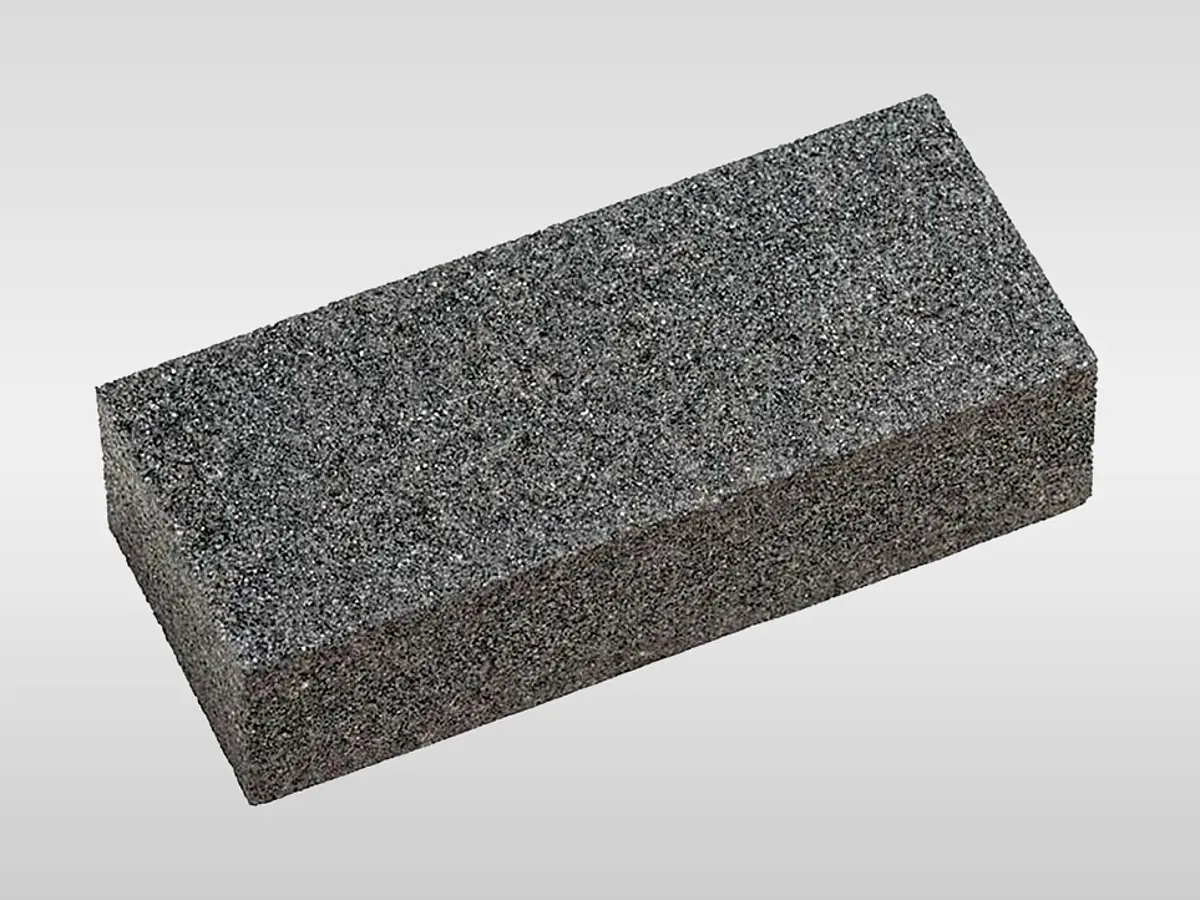
Start with the task at the workpiece: do you need to sharpen a cutting edge, or produce a fine matt finish on a surface? The listed 3M 6223J diamond whetstones are described for sharpening chisels, gouges and knives. PFERD Poliflex PUR blocks use silicon carbide in a soft, resilient bond; their rhomboid shape also reaches corners. Consider the starting condition, manual guidance and desired surface appearance. The N20, N40 and N74 designations of the diamond stones and grit sizes 60, 120 and 240 of the Poliflex blocks belong to different product constructions and cannot be compared by number alone.
02
WHETSTONES IN THE RANGE
Diamond whetstones and Poliflex blocks
The range includes diamond whetstones for sharpening and Poliflex fine-finishing blocks for a gentle, matt finish. The product data describes each design and grit.
No products found
No products are currently listed in this category. Request a call back and we will help you find the right product.
Request a callback03
CHOOSING FOR HAND FINISHING
Assess grit and bond against the required result
For a dull cutting edge, first establish which tool needs sharpening and how its edge can be guided. For a finely finished contour or corner, the resilient Poliflex block may instead be relevant. Within the Poliflex range, PFERD describes grit 60 as coarse, 120 as medium and 240 as fine; the choice follows the required finish. The N designations of the diamond stones need to be assessed for the specific product. If the stone you currently use clogs, produces an uneven result or makes the work take too long, tell us the material, starting condition, current abrasive and target surface. This allows the choice to be checked against your process.
04
QUESTIONS ABOUT WHETSTONES
How do diamond whetstones and Poliflex blocks differ?
The listed 3M 6223J diamond whetstone is described for sharpening and dressing the cutting edges of hand tools. The PFERD Poliflex PUR block is a fine-finishing abrasive containing green silicon carbide in a soft, resilient bond. It produces cool, gentle grinding and a fine matt surface; its rhomboid shape helps at corners. The first decision is therefore whether you need to sharpen an edge or fine-finish a surface or contour. These different constructions should not be selected against each other solely by their grit numbers.
How do I choose the grit of a Poliflex block?
Base your choice on the starting condition and the finish you want. For the listed PUR blocks, PFERD describes grit 60 as coarse, grit 120 as medium and grit 240 as fine. Each uses a soft bond containing silicon carbide and retains the same rhomboid shape. Check at the workpiece whether it first needs more substantial treatment or whether a fine matt finish is the main objective. A finer grit does not automatically replace preparation of a damaged or strongly uneven surface. Include the abrasive currently used and the process problem in your enquiry.
Are N20 and grit 240 directly comparable?
No. These designations belong to different product ranges and constructions. N20 identifies an option of the listed flexible 3M diamond whetstone; grit 240 belongs to the PFERD Poliflex block with silicon carbide and a PUR bond. The numbers alone establish neither the same finish nor suitability for the workpiece. Compare the products by task, material, manual guidance and target result. Sharpening an edge makes the sharpening task decisive; for a surface or corner, how the abrasive body follows the geometry also matters.
What information does Krückemeyer need for selection advice?
Tell us the workpiece material and geometry, the condition of its edge or surface and the result you want. It also helps to identify the whetstone currently used, its grit or design and the specific problem, such as an uneven finish, clogging or insufficient service life. Explain whether you sharpen a cutting edge by hand or fine-finish a surface or hard-to-reach corner. Krückemeyer GmbH can then assess the listed designs in the context of your application and clarify which further product information is needed for a sound choice.
05
Request advice
Describe the workpiece, its starting condition, the abrasive currently used and the finish you want. Our abrasives team will assess with you which whetstone design suits your manual task.
Choose a whetstone for your task
Send us the details of the material, cutting edge or surface and the abrasive currently used. We will discuss a suitable design for your application.

WHETSTONE ADVICE
Jürgen Müller
Contact for products
Jürgen Müller will discuss material, handling and the target surface with you when choosing a whetstone.
Advice and sales to business customers only!