STRUCTURED ABRASIVES
3M Trizact abrasives for consistent surface finishes
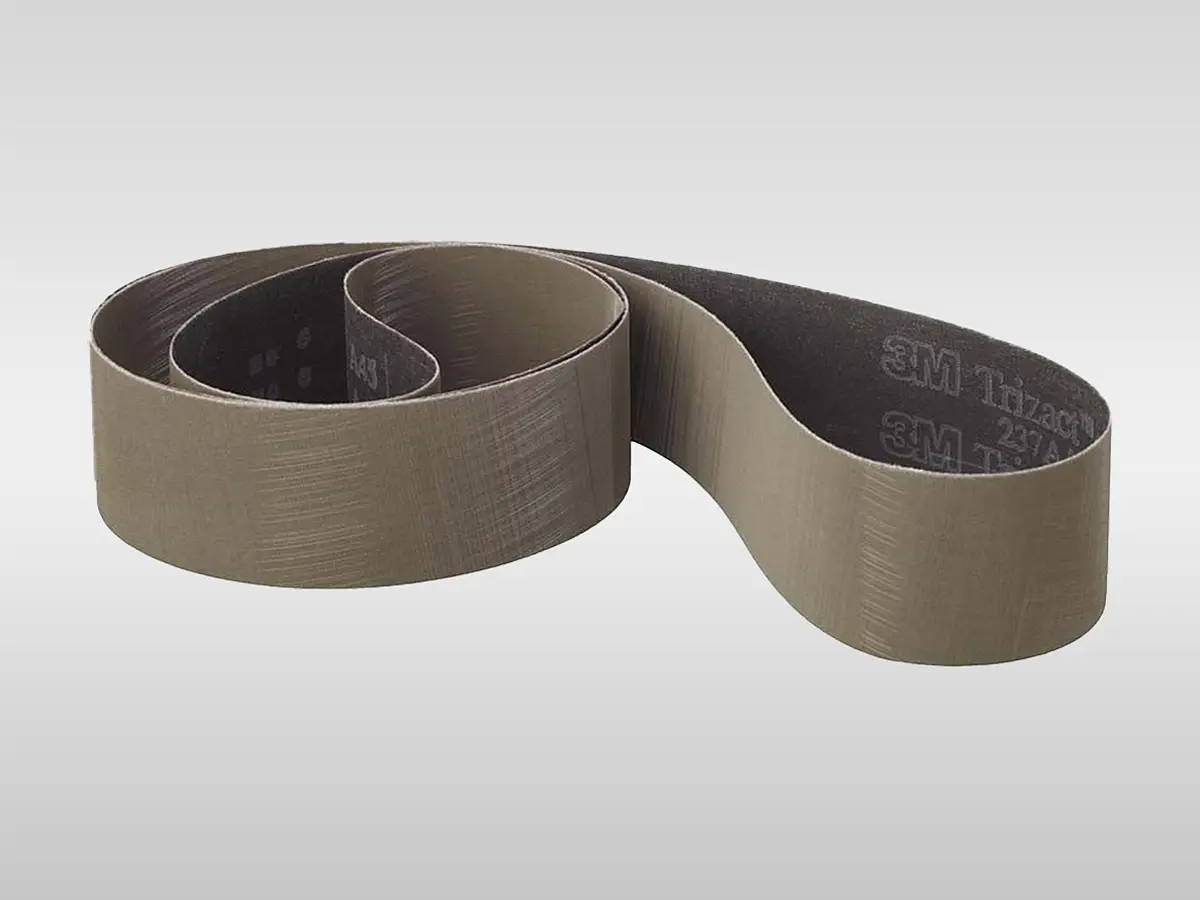
3M Trizact uses ordered abrasive structures that expose fresh mineral as they wear. Choose a belt, roll or disc according to the material, target surface, machine and process – rather than the grade designation alone.
01
Selection criteria
Choose Trizact by task before browsing
Start with the material, the condition of the existing surface and the finish required. Then compare product form and backing: flexible cloth belts can follow contours; water resistant versions are intended for suitable wet processes; film products address other finishing tasks. Contact pressure, machine and the existing abrasive sequence also affect the choice.
The Trizact grade designation does not replace a check of the specific product construction or a trial on the workpiece. If the current abrasive loads early or the result varies, examine the abrasive and the process together.
02
3M TRIZACT RANGE
3M Trizact belts, rolls and discs in the range
The product listing contains Trizact versions for different finishing tasks. Check the backing, mineral, form and suitable application of each item.
No products found
No products are currently listed in this category. Request a call back and we will help you find the right product.
Request a callback03
TRIZACT SELECTION GUIDE
Which Trizact version fits your process?
For contoured metal parts, flexible cloth belts such as 217EA or 307EA may be suitable depending on the task; 253FA is specified for wet finishing on steel and stainless steel. Film rolls and discs have different backings and mounting methods. Match the material, initial finish, target surface, pressure, wet or dry process and machine to the specific version. For a focus on belts, see Trizact abrasive belts. Tell us which abrasive you currently use and what problem you observe; we can assess suitable products and a fitting supply form.
04
QUESTIONS ABOUT 3M TRIZACT
How does 3M Trizact differ from conventional abrasive grain?
3M Trizact uses ordered three dimensional mineral structures. As they wear, further layers of abrasive mineral are exposed. This supports a consistent scratch pattern over the abrasive's service life. The actual surface quality still depends on the material, the preceding abrasive step, the selected version and the process. Assess the result on the actual workpiece rather than relying on the product family name alone.
Which Trizact backing suits contoured metal parts?
A flexible cloth backing may suit contoured workpieces. For 3M Trizact 217EA, the manufacturer specifies a highly flexible J backing and use on profiled parts at low grinding pressure. 307EA is also described with a flexible backing for small contours. What matters is how the belt contacts the part on your machine and which surface must be produced from the existing prefinish. Backing, contact area and belt tracking have to work together.
When is a Trizact version intended for wet grinding?
Choose a version expressly specified for wet grinding. 3M Trizact 253FA has a water resistant, heavy cloth backing and is listed for wet finishing on steel and stainless steel. That does not approve every Trizact belt or every machine for wet use. Check the product information, material, available coolant and process conditions together. The belt currently used and the desired scratch pattern help us assess your application.
Why is the grade designation alone insufficient for choosing Trizact?
The grade designation describes only part of the version. Trizact products also differ in mineral, structure, backing and form; 3M offers cloth belts and film products for different tasks. Contact pressure, machine, initial finish and processing medium also affect the workpiece. Choosing solely by an A designation can therefore miss the required finish. Define the target surface and starting condition, then test the specific product version in the process.
What information helps with an enquiry about a Trizact belt?
Tell us the material, part shape, starting condition, target surface, machine and belt currently used. Belt width and length, and whether the process is wet or dry, are also useful. If the belt wears early, loads or produces a variable finish, describe the problem. Krückemeyer GmbH can convert coated abrasives into abrasive belts; the material, dimensions, joint and suitability are assessed for the specific requirement.
05
Request advice
Describe the material, part geometry, initial condition, target surface and your machine. Details of the current abrasive and the problem will help us assess the product form, process and possible converting options.
Assess Trizact for your finishing task
Send us details of your application and desired surface finish. We will discuss a suitable Trizact version and the checks it requires.

TRIZACT ABRASIVES ADVICE
Jürgen Müller
Contact for products
Discuss the material, desired finish and existing abrasive process with our abrasives team.
Advice and sales to business customers only!